One identity. Every service.
NeID puts a government-grade credential on your phone. Prove who you are at a bank, a hospital or a government portal in seconds. No passwords, no photocopies, no queue.
Set up once. Use it everywhere.
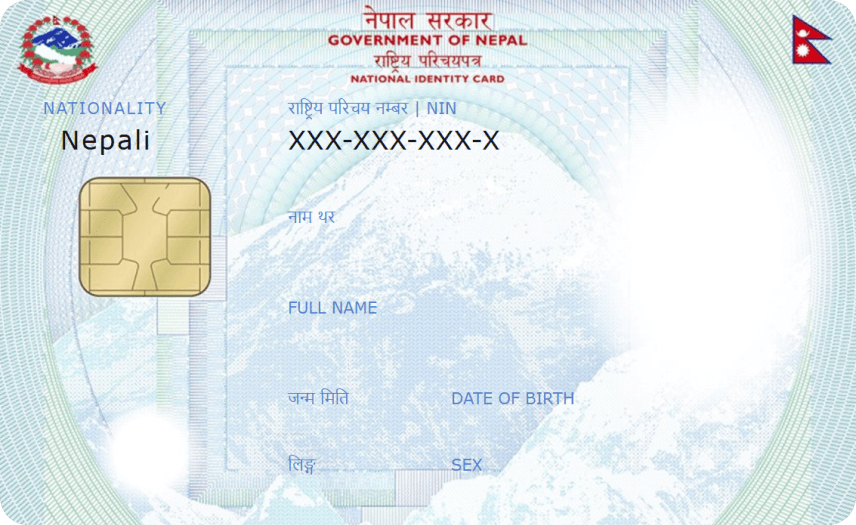
Hold your biometric National ID or e-Passport to the back of your phone. NeID reads the chip and checks the issuing authority’s signature.
An active face-verification session runs on screen. A short sequence of light and motion your phone streams to the verification service, which matches you against the biometric photo on the chip and proves a live person is present, not a photograph, a mask or a replayed video.
Your phone generates a private key inside its secure enclave. It never leaves the device. Not to us, not to anyone.
Why it is different
Authentication is a signature from your device, not a secret sent to a server. There is nothing to steal, leak or reset.
Each request names the service, the reason and the exact data. You approve or you cancel. And every event lands in your activity log.
Your phone sends the claims straight to the app or service you are using, and they stay with that third party. Nothing routes through NeID. We issue the credential and publish revocation status. That is all.
Signing is a local operation. NeID caches revocation state so it keeps working where the network does not.
Add NeID to your service
Your server builds a presentation request, your page shows a QR, the citizen approves on their phone, and the token posts straight to you. There is no client secret and no OIDC provider to configure.
- Verify a customer in about thirty seconds
- Complete KYC without collecting a single document
- Legally binding signatures under the Electronic Transactions Act, 2008
eKYC in seconds, not days
A bank onboarding a customer today runs a paper application, photocopies of a citizenship certificate, a scheduled video-KYC call and a manual review queue. With NeID the customer scans a QR, approves on their phone, and your server receives verified, government-anchored claims. Signed, revocation-checked and ready to store.
This is the part that changes the shape of the problem. A password proves someone knew a secret. A NeID presentation is checked against a live, non-revoked credential anchored to a government document and bound to a key inside one phone. So the tenth login is verified exactly as hard as the first. KYC stops being an event you schedule and becomes a property of every session.
On a six-month cycle a customer’s identity is only as current as their last refresh. Nothing tells you when a document is replaced, a citizenship record is corrected or a device is lost in between. You find out at the next cycle, up to six months later. NeID checks the status list on every single presentation, so a revoked or superseded credential stops verifying within minutes. That closes the window rather than shortening it, and it is the reason shortening the cycle is the expensive way to buy assurance.
Not just onboarding. Every login after it.
Onboarding is where identity systems usually stop. NeID is the part that keeps going. The same credential that opened the account signs the user in tomorrow, approves the transfer next week and authorises the admin action next month.
A password proves someone knew a string. Stop securing an internal dashboard with a shared secret that can be phished, reused, or handed over when someone leaves.
Sessions are tied to a named, document-verified person. Not to a login that three people share and nobody owns.
Ask for identity again at the moments that carry risk: a large transfer, a permission change, an export of customer data.
Forget the days of securing a dashboard with a password. Tie the session to a real, verifiable identity.
A signature you do not have to travel for
Getting a digital signature certificate in Nepal today means an in-person visit, paperwork, and a token you have to keep track of. A NeID enrolment already produced a certificate. The private key is in the phone in your pocket. Signing a document is the same tap that signs you in.
The same certificate is your staff badge
A company that needs to know who is on the other end of a login has the same problem a bank has, minus the regulator. NeID answers it with the credential the employee already holds.
An employer confirms a real, government-anchored identity at onboarding. Not an email address that HR typed in.
There is exactly one active certificate per person. A password can be forwarded to a colleague; a key in a secure enclave cannot.
Work tools integrate the same presentation flow. No shared credentials, no password resets, no secret sitting in a server you have to defend.
The key is gone and unrecoverable by design. The identity record is not. Revoke, re-enrol on the new device with the same card and face check, and the old certificate is on the revocation list.
Build on top of NeID
One presentation request, one verified response. Your server builds the request, your page shows the QR, and the citizen approves on their phone. No client secret, no token server, no identity data passing through us.